6 Tips for Better Financial Forecasting

June 5, 2025
Written By Colin Napier

Key points:

  • Use rolling forecasts to keep your plans flexible and current.

  • Maintain clean, accurate data to improve forecast reliability.

  • Consider external market and economic trends in your projections.

  • Collaborate with all departments to capture real-world insights.

  Financial forecasting is a handy tool when it comes to mapping out the trajectory of your business. You may need to generate a financial forecast when:
  •         One is required by your bank or broker for funding purposes
  •         Evaluating the impact of a new business or service/product
  •         Assessing potential model changes in the economics of your business (for example, the impact of tariff introduction)
  •         You need to understand the impact of your capital expenditure requirements
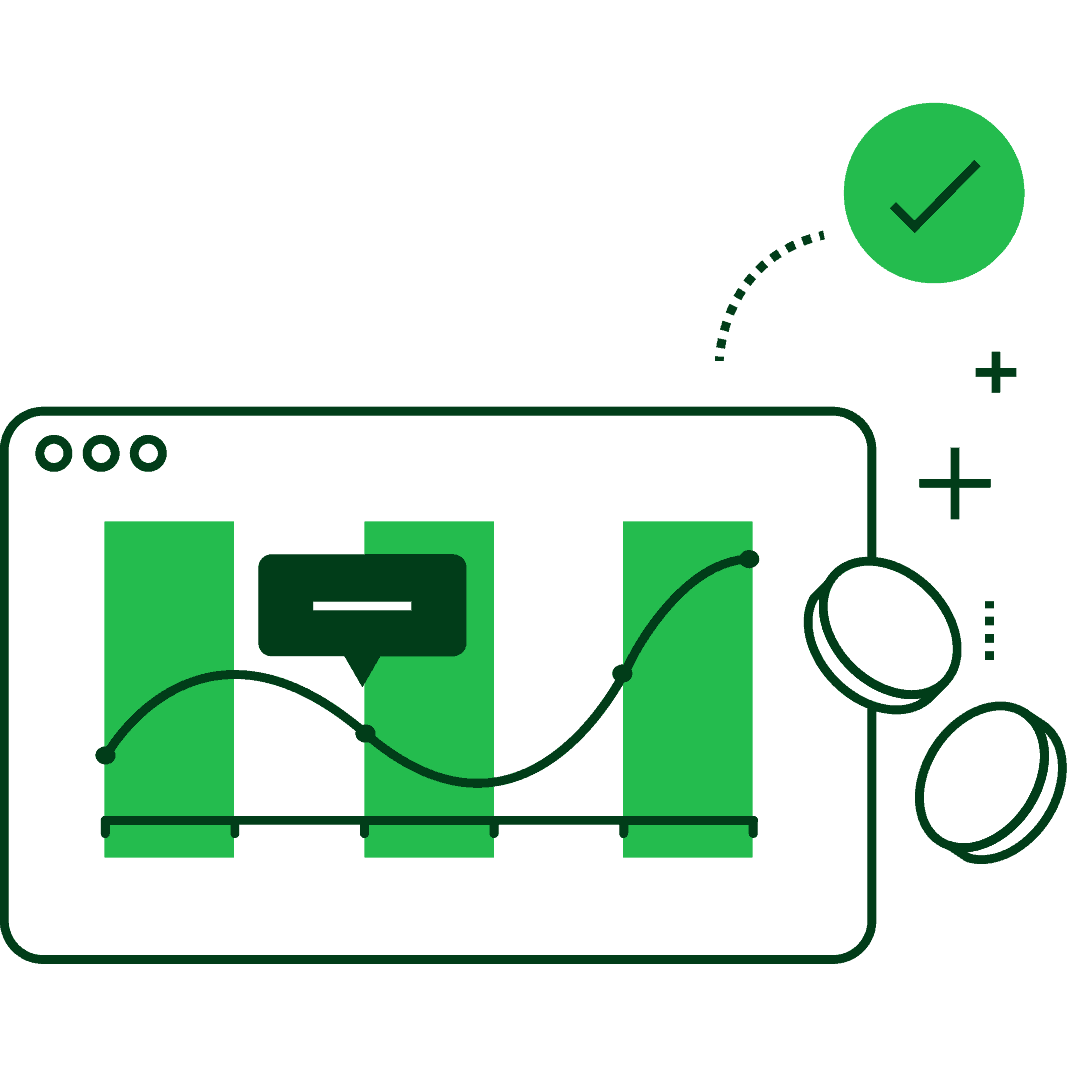
  Or perhaps you simply want to ensure you are solvent and not heading for disaster! Whatever the purpose, these tips for generating accurate financial forecasts will help you avoid the all-too-common pitfalls and create bullet-proof forecasts. A skilled financial consultant can also guide you through this process, ensuring your forecasts are insightful. Financial forecasting bar chart used in mapping out teh trajectory of a business

1. Start With a 3-Way Forecasting Report with P&L, Balance Sheet and Cashflow

An effective forecast should offer a complete birds-eye view of your business and must therefore include a Profit and Loss statement (P&L), a Balance Sheet and Cashflow. Whilst a P&L is generally the starting point, there’s often a significant difference between profit and cash, particularly in the short term.What are some of the common variances between profit and cash?
  1.       The balance between depreciation and capital expenditure:
Depreciation is a non-cash item that improves cash flow, but capital expenditure is an immediate outflow that is only recognised in your P&L over time as depreciation. For capital-intensive businesses (e.g., a transport business), understanding the interaction between these elements is vital.
  1.       Changes in working capital such as debtors, creditors and inventories:
As businesses grow or shrink, working capital changes become more apparent. A fast-growing business may well require higher inventory levels and have more debtors. As a result, it may struggle with cash flow despite being profitable and growing.
  1.       The timing of tax payments (which often differ):
In your P&L, the income tax should be recognised monthly with your profits, but the actual payment schedule will often be different. The same occurs for GST. For some businesses, the Research and Development tax offset and the timing of a refund is significant. (Of course, depending on your business profile, adjusting for these items may be significant or it may be immaterial).
  1.       Other factors:
Financial items like debt repayments or owner drawings (depending on how they’re being taken) can also create a significant disconnect in your forecasts.

2. Align Your Accounting Systems

For the key items in a forecast, you need to line up the treatment with the accounting system.  For example, if you pay people weekly and you recognise wages/salaries when they’re paid, then your forecast should be on the same basis. Therefore, if you forecast wages/salaries on a monthly estimate but pay them weekly, you’re automatically creating a disconnect between your actual results and your forecast.

3. Focus Your Financial Forecast on the Important Issues

Most forecasts are reliant on only four or five key assumptions. Get these right and your forecast will be substantially correct. For example, if you have one significant customer with a Customer Price Index (CPI) price rise trigger in a contract, then you should be precise as to the amount and timing of that rise, and its effect on revenue.  While for smaller customers, you might simply have a blanket increase to cover pricing changes—as each change to these customers is largely immaterial to the overall accuracy of your forecast.  Similarly, your forecast is unlike to live or die based on your spending on printing and stationery. So, if you under forecast by even 20 per cent here, will it really matter? However, for most organisations, wages and salaries form a large part of their cost base, so getting this expense right is important.

4. Overreliance on Historical Data

While historical data often serves as a starting point, excessive dependence on past history can be misleading. Markets and economies are dynamic, and factors such as technology changes, supply chain changes, shifts by competitors and so on can rapidly alter conditions. In addition, there are often macroeconomic issues at play. In recent times, both Covid and US tariffs have created highly volatile outcomes. Therefore, it pays to build in even simple known changes, e.g., changes to the superannuation guarantee rate.

5. Excessive Optimism

Whilst the forecast shouldn’t be all doom and gloom, it should be prepared in such a way that you are more likely to be (pleasantly!) surprised by exceeding the forecast rather than falling short. There is no hard and fast rule, but when I prepare a forecast, I like to think the actual result will be better than the forecast 60-70 per cent of the time. Being overly optimistic is particularly prevalent when something new is involved. Breaking into a new market or launching a new product is rarely as easy as it seems. Even if you have a better offering or product, factors like customer inertia and changeover costs/time can keep some people tethered to their existing solution (or at least be a handbrake to rapid uptake). In these cases, it pays to build genuine sales momentum and not overinflate your forecast estimations, as they can come back to bite you. The same goes for large project-type capital expenditure. History tells us that the more novel or innovative a project is, the likelihood of significant delays and cost overruns becomes almost certain. In my experience, for the first 80 per cent of the project, everything looks good and is tracking well—but then a whole lot of issues crop up at the back end requiring extra time and resources. So it pays to be realistic from the outset.

6. Run Scenario Testing

To some extent, the need for scenario testing is dependent upon the purpose of your forecast.  For a relatively stable business, the need for scenario testing isn’t as great, although it is still useful. For a new business, testing the result against increases and decreases in the key variables is critical. To avoid making your financial model too complex, you should limit the number of variables you use.

7. Key Assumptions + Commentary

Your financial forecast is simply an outcome of operational parameters, so it’s important to contextualise any key parameters and assumptions that may have impacted the result. E.g., Is it utilisation rates, tonnes sold, deals closed? Then comment on the basis for your conclusions. If you’re forecasting shifts in your market, what’s the backup for your assertion? Do you have any evidence?  Although it may be uncomfortable, you need to provide enough information that enables the forecast to be challenged. This way, you’ll reach a much more robust outcome. As a final point, don’t be afraid to include financial ratios such as debt/equity ratio, current assets/current liabilities (a measure of solvency), percentages of how expenses correlate to revenue and even operational ratios and KPIs, if they are likely to help users understand the forecast. Financial forecast graph showing a steady increase To Wrap Up: No one has a crystal ball, so pinning down a precisely accurate financial forecast is tough—and of course, the underlying assumptions you use will often change. Which effectively outdates every forecast the day after it is produced! Nevertheless, preparing a forecast is a fantastic financial discipline, which can often pinpoint problems long before they occur, allowing you to be on the front foot.  If you are releasing a forecast to external parties, solid numbers that then correlate well to actual results will earn you credibility and trust. Engaging a financial consultant can also significantly increase the accuracy and reliability of the forecasts.  If you’re struggling with a financial forecast, drop me a line. I’m always happy to have an informal chat. Read more on our other blogs:


Our Services

Match Point Icon Financial Management services

Financial Management and Reporting

Are you experiencing revenue leakage due to broken processes? Need reliable monthly reporting packs for the board? Our contract CFO services can streamline your processes, provide access to figures and forecasts, identify and mitigate risk, and build meaningful, measurable finance strategies aligned to business goals.
Learn more
Match Point Strategic Financial Advisory services

Strategic Financial Advisory

Planning a sale, purchase, exit or M&A? Running up against complex accounting problems? Our expert strategic advice, analysis and reporting unlocks the story behind the numbers, so you can make the right moves at the right time, while minimising risk and maximising value.
Learn more
Match Point Financial Strategy services

Strategy Planning & Risk Advisory

Our outsourced CFOs will develop a business strategy that allows you to be confident in your financial decisions and capitalise on growth opportunities. We can also comprehensively audit and advise your business on risk management.
Learn more
Match Point Icon Board Advisory

Board Advisory

If high-level questions around commercial finance regularly come up during board or advisory panel meetings, it might be time to bring a wise financial head into the room. Our founder Colin Napier is a seasoned CFO and career accountant who can bring ongoing value to your discussions.
Learn more